Open a dozen AI-generated brand campaigns and you will notice the same things: glossy skin, neon-tinted light, a product floating in soft focus, a mood that could belong to anyone. The tools differ, the brands differ, the result does not.
The neural networks are not the problem. The brief is. When a brand says "make it on-brand," it usually means "use our colors and look like our existing photos." AI will happily do that and give you a competent copy of what you already have. And when nobody sets a direction at all, it falls back on its own default aesthetic, the average of everything it has seen. Both roads end in the same place: content that is technically fine and instantly forgettable.
Brand DNA is the way out, but only if you read it correctly.
A brand's DNA is the reason people choose it: the attitude. Palette, typography and photo style are only how that attitude was expressed in the past. Treat the expression as DNA and you lock yourself into repeating it. Treat the attitude as DNA and you get freedom: the same character, in a world the brand has never shot.
I tested this on a spec concept for DJOZ, a handcrafted designer bag brand. (A spec concept is a self-initiated project, not a commissioned campaign.)
DJOZ sells loud bags with loud inscriptions, rich color and, most memorably, chicken feet. What hooked me was not the product but the positioning: the brand is not afraid of being too much. Nothing in it asks for permission.
I studied the brand's DNA and its existing content. Some of that content is shot in a village. It is real and recognizable, and it was the safe route: recreate the village in AI, with better light.
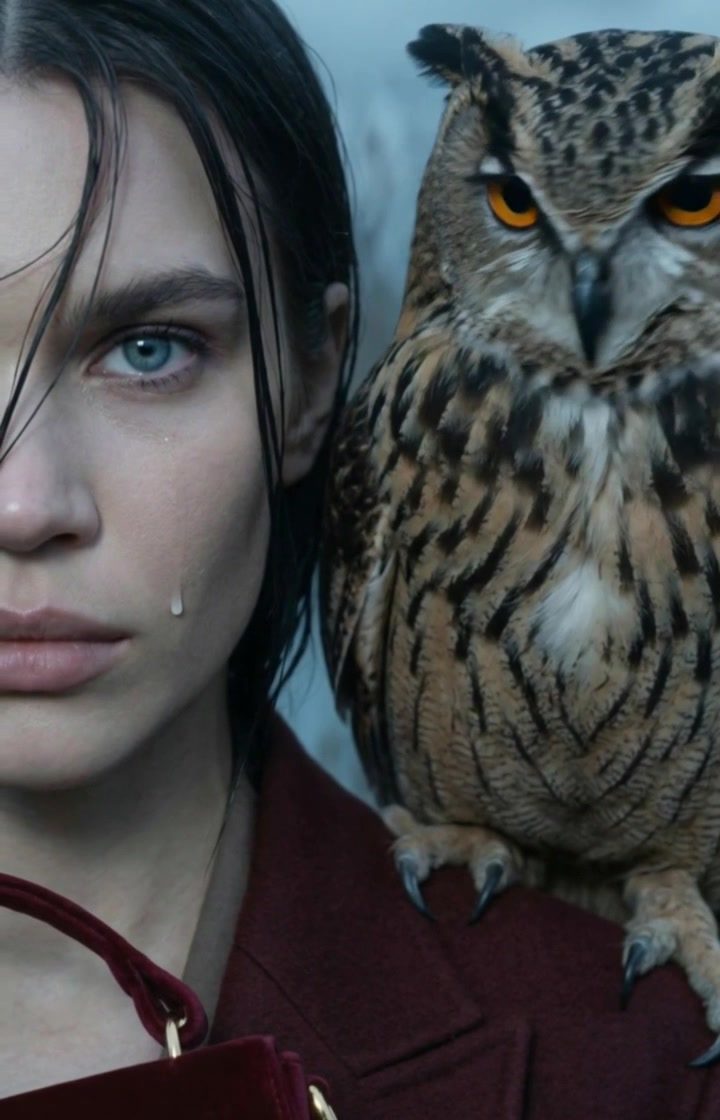
I did not. Re-shooting what a brand already has adds nothing. AI would just be a cheaper camera. Instead I went for mystery and swamp, closer to witches and magic. (Anyone raised on Slavic folklore will see the link between chicken legs and witches immediately.) Same roots, a world the brand had never entered, and one where a bag with chicken feet feels more natural than it would in a tidy photo from a village yard.
For the second concept I ran an experiment: what if I ignore how the brand looks and keep only how it feels? Visually, it does not match the brand. Atmospherically, it is still DJOZ: reckless, strange, unapologetic.
That is the real test of DNA. Take away the visual signatures and see whether the brand is still there. If it is, you found the DNA. If it vanished, you only had a style.
Two things took the most work.
Character consistency. A campaign reads as a story only if the same characters stay recognizable from shot to shot. Otherwise it is a pile of unrelated images.
Magic and atmosphere. Models drift toward generic fantasy unless you keep deciding, shot after shot, what belongs in this world and what does not.
I also recorded the voiceover by hand. An AI-made film still runs on human decisions, and sometimes on a human voice.
Put this into your brief and the difference shows up in the first round. If you are not sure what a good brief contains, start with How to Brief an AI Content Creator. For the production side of a concept like this, see How I Created a 30-Second Brand Film with AI in 5 Days.
Want content that feels like your brand rather than looks like everyone else's?
Let's talk on Telegram